Physical Address
304 North Cardinal St.
Dorchester Center, MA 02124
Physical Address
304 North Cardinal St.
Dorchester Center, MA 02124

Pulse
Pulse
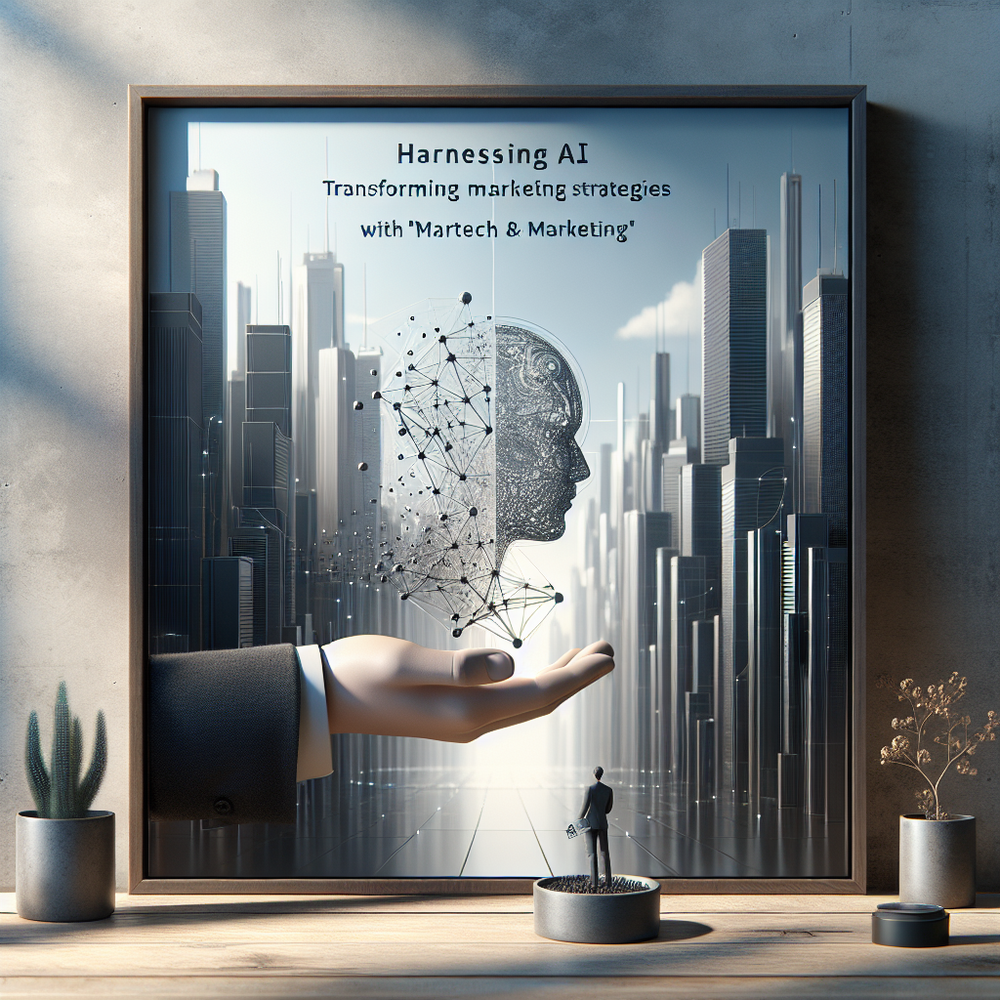
Overview: The integration of AI technologies within marketing technology (Martech) platforms—collectively termed ‘Martech & AI’—is revolutionizing how brands engage with customers, automate workflows, and analyze data for strategic decisions. This evolution enhances campaign precision, operational efficiency, and customer experience.
‘Martech & AI’ refers to the application of artificial intelligence tools and techniques embedded in marketing technology stacks to streamline processes, improve targeting accuracy, and generate actionable insights. It addresses challenges marketers face with complex data sets, cross-channel coordination, and personalization demands.
At the core of ‘Martech & AI’ lie components such as machine learning algorithms for customer segmentation and predictive analytics, natural language processing for content generation and sentiment analysis, and automation agents managing omni-channel campaigns. Customer Data Platforms (CDPs), Customer Relationship Management (CRM) systems, and attribution models increasingly incorporate AI capabilities to enhance decision-making.
AI-enhanced Martech platforms collect and unify customer data from diverse sources, then apply algorithms to detect patterns and predict behaviors. Automation bots can trigger personalized messages or content dynamically based on real-time signals. Advanced attribution models leverage AI to more accurately assign credit across touchpoints, enabling refined budget allocation and performance optimization.
Marketing teams use AI-driven Martech to improve lead scoring, personalize website experiences, optimize ad placements programmatically, and automate repetitive tasks such as campaign reporting. AI agents assist in real-time customer service via chatbots, reducing response times and increasing engagement. Growth teams benefit from predictive models to forecast customer lifetime value (LTV) and optimize Customer Acquisition Cost (CAC).
Implementations of ‘Martech & AI’ must navigate regulations including GDPR, CCPA, and Brazil’s ANPD to ensure lawful data collection and processing. Transparency in AI-driven decision-making and user consent management are critical compliance considerations.
Marketers should leverage AI-enhanced Martech to optimize media mix models, automate creative content personalization, and improve attribution accuracy. Organizational shifts may include new roles for data scientists and AI specialists, as well as cross-functional collaboration between marketing, IT, and legal teams to maximize technology benefits while managing risks.
Post date: 2024-06-12